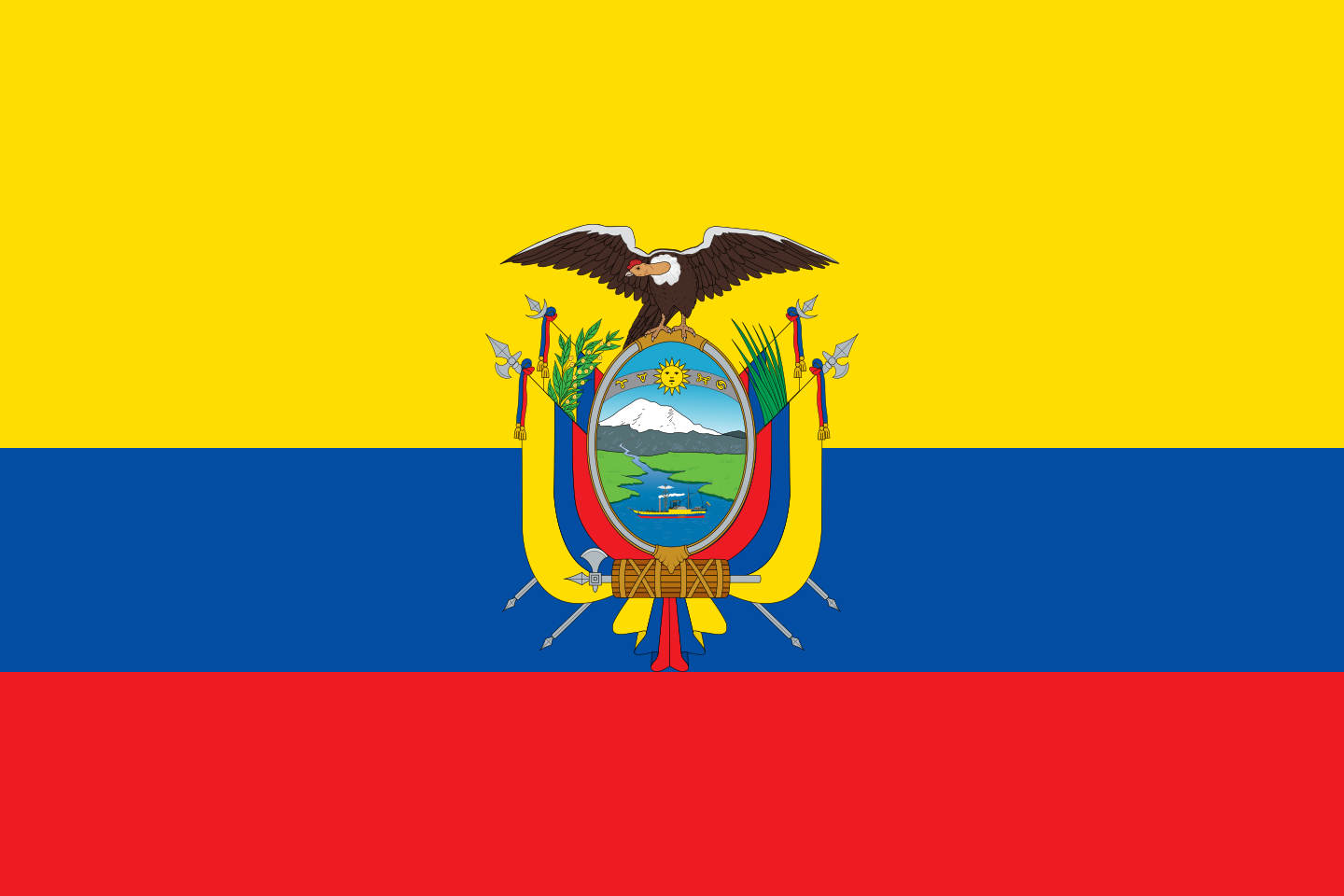
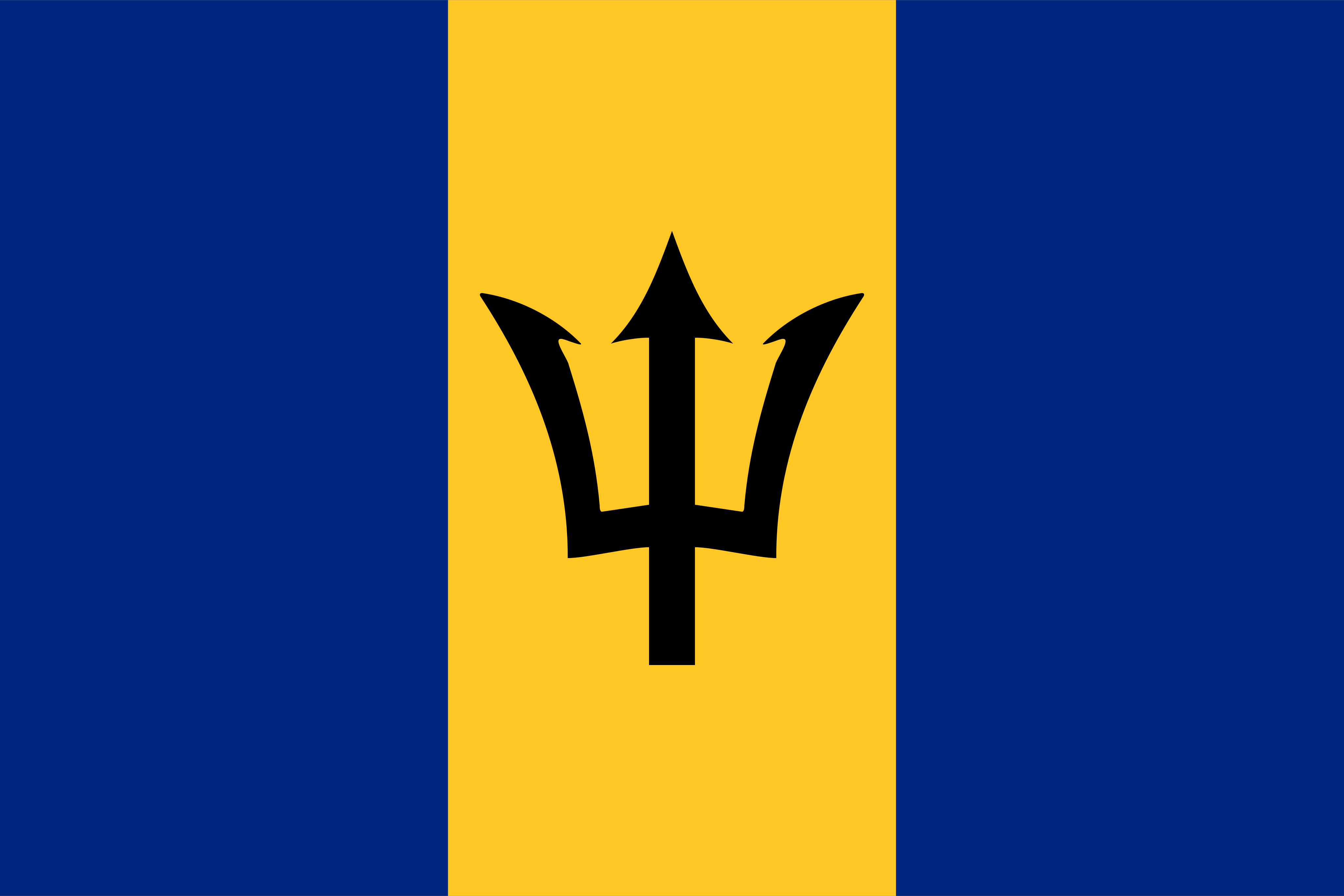
If you lived in Vietnam instead of Bahamas, you would:

Health

be 63.6% less likely to be living with HIV/AIDS

In Bahamas, 1.1% of people are living with AIDS/HIV as of 2024. In Vietnam, that number is 0.4% of people as of 2024.

View global rankings →

be 95.0% less likely to be obese

In Bahamas, 48.3% of adults are obese as of 2024. In Vietnam, that number is 2.4% of people as of 2024.

View global rankings →

see 70.2% less spent on your healthcare

Bahamas spends $2,316 per person on healthcare as of 2023 (international dollars, adjusted for prices). Vietnam spends $690 as of 2023.

View global rankings →

have 11.7% less access to essential health services

Bahamas scores 77 out of 100 on the universal health coverage index as of 2021. Vietnam scores 68 as of 2021.

View global rankings →

be 2.2 times more likely to die by suicide

Bahamas has a suicide rate of 3.2 per 100,000 people as of 2021. In Vietnam, it is 7.3 per 100,000 as of 2021.

View global rankings →

Economy

be 83.5% less likely to be unemployed

In Bahamas, 9.2% of the labor force is unemployed as of 2025. In Vietnam, that number is 1.5% as of 2025.

View global rankings →

make 87.2% less money

Bahamas has a GDP per capita of $39,455 as of 2024, while in Vietnam, the GDP per capita is $5,066 as of 2025.

View global rankings →

Life

be 36.8% less likely to die during childbirth

In Bahamas, approximately 76.0 women die from pregnancy or childbirth per 100,000 live births as of 2023. In Vietnam, 48.0 women do as of 2023.

View global rankings →

have 24.0% more children

In Bahamas, there are approximately 10.8 babies per 1,000 people as of 2024. In Vietnam, there are 13.4 babies per 1,000 people as of 2024.

View global rankings →

Expenditures

spend 27.6% less on healthcare

Bahamas spends 6.3% of its total GDP on healthcare as of 2023. In Vietnam, that number is 4.6% of GDP as of 2023.

View global rankings →

Environment

be 5.2 times more likely to die from air pollution

In Bahamas, air pollution causes 10.0 deaths per 100,000 people as of 2019. In Vietnam, it causes 52.0 as of 2019.

View global rankings →

emit 17.3% more CO2

Bahamas emits 3.6 tonnes of CO2 per person each year as of 2024. Vietnam emits 4.3 tonnes as of 2024.

View global rankings →


Sources: World Bank (2021–2025), United Nations SDG Indicators (2019–2021), World Health Organization (2024). How we calculate this

Vietnam: At a glance

Vietnam (sometimes abbreviated SRV) is a sovereign country in East/Southeast Asia, with a total land area of approximately 310,070 sq km. The conquest of Vietnam by France began in 1858 and was completed by 1884. It became part of French Indochina in 1887. Vietnam declared independence after World War II, but France continued to rule until its 1954 defeat by communist forces under Ho Chi MINH. Under the Geneva Accords of 1954, Vietnam was divided into the communist North and anti-communist South. US economic and military aid to South Vietnam grew through the 1960s in an attempt to bolster the government, but US armed forces were withdrawn following a cease-fire agreement in 1973. Two years later, North Vietnamese forces overran the South reuniting the country under communist rule. Despite the return of peace, for over a decade the country experienced little economic growth because of conservative leadership policies, the persecution and mass exodus of individuals - many of them successful South Vietnamese merchants - and growing international isolation. However, since the enactment of Vietnam's "doi moi" (renovation) policy in 1986, Vietnamese authorities have committed to increased economic liberalization and enacted structural reforms needed to modernize the economy and to produce more competitive, export-driven industries. The communist leaders, however, maintain control on political expression and have resisted outside calls to improve human rights. The country continues to experience small-scale protests from various groups - the vast majority connected to land-use issues, calls for increased political space, and the lack of equitable mechanisms for resolving disputes. Various ethnic minorities, such as the Montagnards of the Central Highlands and the Khmer Krom in the southern delta region, have also held protests.
Read more

How big is Vietnam compared to Bahamas? See an in-depth size comparison.

Share this

Ask the Elsewhere Community

Join the Elsewhere community and ask a question about Vietnam or Bahamas. It's a free, question-and-answer based forum to discuss what life is like in countries and cities around the world.