

Quality of life comparison

compared to

If you lived in Denmark instead of Western Sahara, you would:
Geography
see 6.6 times more coastline
Western Sahara has a total of 1,110 km of coastline. In Denmark, that number is 7,314 km.
Sources: The World Factbook. How we calculate this
Compare further: Western Sahara vs. Denmark






Denmark: At a glance
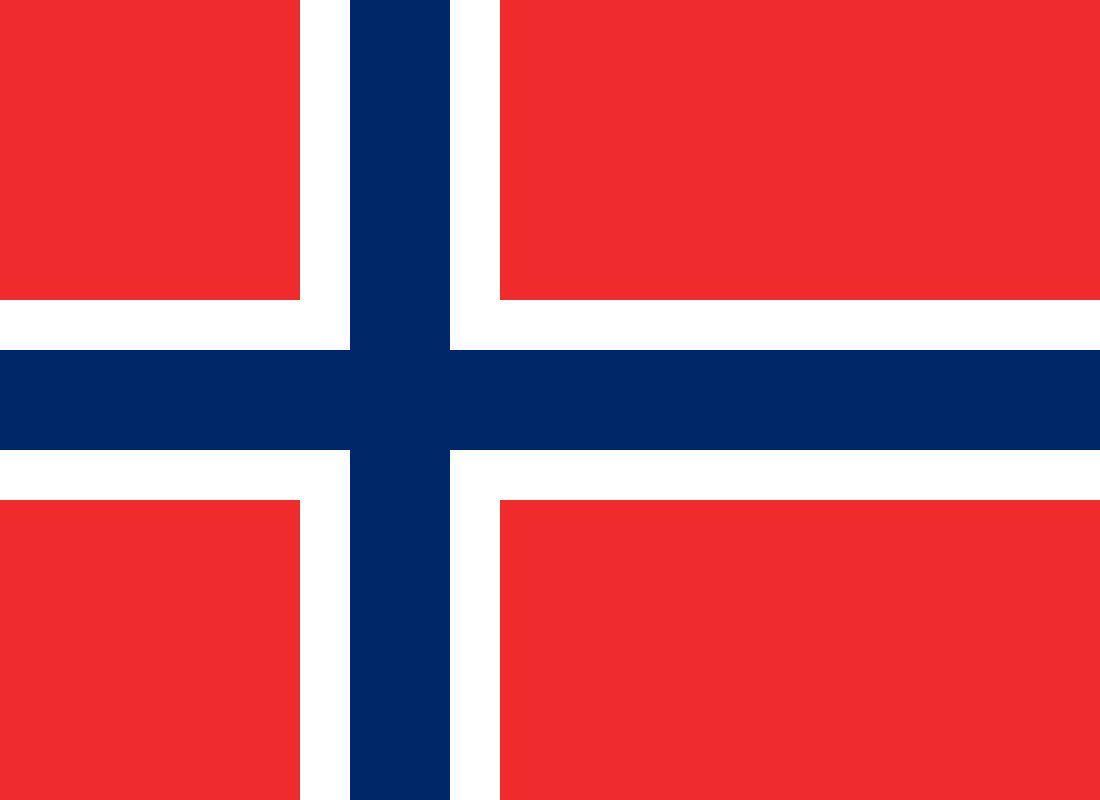
Denmark is a sovereign country in Europe, with a total land area of approximately 42,434 sq km. Once the seat of Viking raiders and later a major north European power, Denmark has evolved into a modern, prosperous nation that is participating in the general political and economic integration of Europe. It joined NATO in 1949 and the EEC (now the EU) in 1973. However, the country has opted out of certain elements of the European Union's Maastricht Treaty, including the European Economic and Monetary Union (EMU), European defense cooperation, and issues concerning certain justice and home affairs.
Read more
How big is Denmark compared to Western Sahara? See an in-depth size comparison.