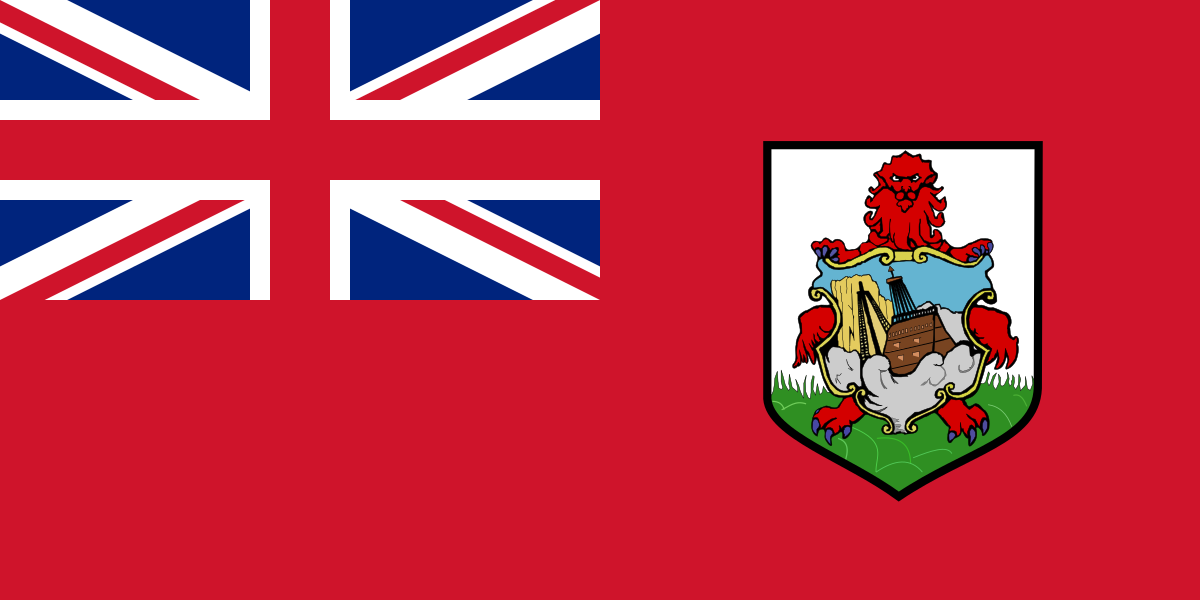
If you lived in Colombia instead of Turks and Caicos Islands, you would:

Economy

make 77.2% less money

Turks and Caicos Islands has a GDP per capita of $37,507 as of 2024, while in Colombia, the GDP per capita is $8,562 as of 2025.

View global rankings →

Life

have 25.7% more children

In Turks and Caicos Islands, there are approximately 10.5 babies per 1,000 people as of 2024. In Colombia, there are 13.2 babies per 1,000 people as of 2024.

View global rankings →

be 3.5 times more likely to die during infancy

In Turks and Caicos Islands, approximately 3.0 children (per 1,000 live births) die before they reach the age of one as of 2024. In Colombia, on the other hand, 10.5 children do as of 2024.

View global rankings →

Basic Needs

be 15.1% less likely to have internet access

In Turks and Caicos Islands, approximately 93.5% of the population has internet access as of 2022. In Colombia, about 79.3% do as of 2024.

View global rankings →

Geography

see 8.2 times more coastline

Turks and Caicos Islands has a total of 389 km of coastline. In Colombia, that number is 3,208 km.

View global rankings →

Safety

be 67.4% less likely to be murdered

Turks and Caicos Islands has a homicide rate of 76.3 per 100,000 people as of 2022. In Colombia, that number is 24.9 per 100,000 as of 2023.

View global rankings →

Environment

emit 63.4% less CO2

Turks and Caicos Islands emits 4.9 tonnes of CO2 per person each year as of 2024. Colombia emits 1.8 tonnes as of 2024.

View global rankings →


Sources: World Bank (2022–2025), The World Factbook (2022). How we calculate this

Colombia: At a glance

Colombia is a sovereign country in South America, with a total land area of approximately 1,038,700 sq km. Colombia was one of the three countries that emerged from the collapse of Gran Colombia in 1830 (the others are Ecuador and Venezuela). A nearly five-decade long conflict between government forces and anti-government insurgent groups, principally the Revolutionary Armed Forces of Colombia (FARC) heavily funded by the drug trade, escalated during the 1990s. More than 31,000 former paramilitaries had demobilized by the end of 2006 and the United Self Defense Forces of Colombia as a formal organization had ceased to function. In the wake of the paramilitary demobilization, emerging criminal groups arose, whose members include some former paramilitaries. The insurgents lack the military or popular support necessary to overthrow the government, but continue attacks against civilians. Large areas of the countryside are under guerrilla influence or are contested by security forces. In November 2012, the Colombian Government started formal peace negotiations with the FARC aimed at reaching a definitive bilateral ceasefire and incorporating demobilized FARC members into mainstream society and politics. The Colombian Government has stepped up efforts to reassert government control throughout the country, and now has a presence in every one of its administrative departments. Despite decades of internal conflict and drug related security challenges, Colombia maintains relatively strong democratic institutions characterized by peaceful, transparent elections and the protection of civil liberties.
Read more

How big is Colombia compared to Turks and Caicos Islands? See an in-depth size comparison.

Share this

Ask the Elsewhere Community

Join the Elsewhere community and ask a question about Colombia or Turks and Caicos Islands. It's a free, question-and-answer based forum to discuss what life is like in countries and cities around the world.